Showing posts with label Dyslexia. Show all posts

Wednesday, November 24, 2010

Learning Disabilities

I used to wonder what it felt like to have a learning disability since I knew many people who had them.
I found out.
When I was finally diagnosed with chronic Epstein-Barr disease I was given an anti- viral medication that caused severe side effects. I won't mention the name of the medicine because the manufacturer would probably sue me. One of the side effects was a learning disability. At least I guess that's what you'd call it, since I'd already finished school.
At first I couldn't read even a paragraph and remember how it had started. My reading skills had always been at the 99th percentile, but all I could read and understand were simple picture books. Over a period of months that improved and I could read normal material again, but only if there was no background noise or anything else to distract me.
And I couldn't remember numbers or do even the simplest arithmetic for months.
That happened about twenty years ago and my reading seems to be almost back to normal. Background noise only distracts me if I'm reading something that requires intense concentration like a scientific or legal document, and I rarely read those. I'd guess my reading level is now at about the 80th percentile, which is certainly adequate.
However I still have a problem remembering numbers and there have been times when I was under stress and couldn't think of my own phone number. Math was always the hardest subject for me in school and my levels on aptitude tests were usually below the 70th percentile. Now they're probably far below that and I'm thankful for calculators and the automatic dial feature on phones.
So now I know how it feels to have a learning disability. It doesn't feel like anything. Being unable to remember a number or something I had read a few seconds earlier felt no different than forgetting other things, and everyone forgets things at times.

Saturday, November 6, 2010

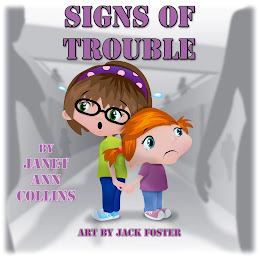
Signs of Trouble

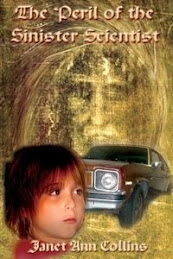
Because of my personal experience with special needs, characters who have them appear in my writing even if I don't plan on that in advance. For example, one of the main characters in The Peril of the Sinister Scientist uses a wheelchair.
Now I've written a book for children specifically about kids with learning disabilities and it has just been published. Signs of Trouble is about two girls with dyslexia who get separated from their Special Education class on a field trip and use what they've learned about safety rules and recognizing signs to get reunited with them.
The book was officially released several days ago and I'm waiting for my copies to arrive in the mail and for it to appear on Amazon, which should happen soon. The book will also be available at other online sites like Barnes and Noble and bookstores can get it through their distributors.
I'm hoping the educational material in the back of Signs of Trouble will help kids understand others who are different from themselves as well as reinforcing safety rules and beginning reading skills. And I think they'll enjoy the story, too.

Wednesday, December 30, 2009

Dyslexia Idea

Dyslexia is a language processing disorder that makes learning to read very difficult. However people I've known who had dyslexia were able to speak normally, so apparently it's primarily a problem with processing visual symbols such as letters and words.
The other day a probably crazy idea occurred to me, but it's possible that it might work. What if dyslexic children and others with learning disabilities that make it difficult to read were taught to read in Braille? Of course reading Braille wouldn't be as useful to them as being able to read written and printed words because far less material would be readily available for them, but it's not impossible that if kids were to become able to read with their sense of touch it might help their brains bypass whatever makes it so hard for them to connect visual images with speech so they could then learn to read visually.
I believe using tactile forms of regular alphabet letters may have been tried, but even adults who can read fluently would find it difficult to decipher small versions of those. That's why Braille writing was invented.
I can't be the first person to have thought of this and I'd love to know if Braille has ever been tried for children with normal vision who have dyslexia and, if it has, how well it worked.