Showing posts with label Prejudice. Show all posts

Wednesday, June 8, 2011

Prejudice

When I was a kid people with disabilities were rarely, if ever, seen in public. There were no wheelchair ramps or curb cuts, so people using chairs or walkers couldn't get around. Children who were Deaf, blind, or 'mentally retarded' and people of any age with mental illness were sent to live in institutions for the rest of their lives.
Things have improved a lot since the Americans With Disabilities Act was approved and, as a result, it's not unusual to see people with special needs in public places.
But prejudice against them still exists.
I've often seen people talk to someone pushing a wheelchair and ignore the person sitting in it, or even talk about that person as if he or she weren't hearing the conversation. And lots of folks are obviously uncomfortable with anyone who seems different.
I hope eventually everyone will realize that, while a few people with mental illnesses or personality disorders might be dangerous, most people with special needs are people first and should be treated like other people.

Saturday, February 12, 2011

Terminology

The terms used for various conditions keep changing. I think "Special Needs" is politically correct at the moment but, like 'disabled,' 'handicapped,' and "crippled,' that may become unacceptable soon.
I remember when people would say 'deaf and dumb" or 'mentally retarded' but those are no longer considered polite.
Actually, saying 'deaf and dumb' was never logical because 'dumb' means not having a voice and most deaf people do have voices. And it was assumed that the inability to talk showed a lack of intelligence so the term, dumb, became a synonym for stupid.
However, in most cases the terms have been changed because people tend to assume that the disabilities/special needs themselves are something to be ashamed of, and that's wrong.
In sports a handicap is something given to a person with greater skills than the competition to make the games fair, so why not use it for people who have a condition that makes life more difficult? It sounds like a compliment to me. And retarded just means slow; there's nothing shameful about that.
The real problem is the attitude that having a special need is something to be ashamed of. Since the ADA was passed people have gotten used to seeing people with those conditions but we still have a long way to go to correct the general attitude about them.
Everyone needs to know the conditions aren't contagious so there's no need to be afraid of people with special needs and they need to know that people who have them are human beings first.
Come to think of it, maybe that prejudice is a special need itself.

Wednesday, January 13, 2010

Attitudes

The legal definition of a disability is “a physical or mental impairment that substantially limits one or more of the major life activities" To impair means to make worse.
One reason special needs limit people's lives is the attitude of many people toward anyone who is different. Since the Americans with Disabilities Act (ADA) requiring handicapped accessibility in public places took effect many conditions are less limiting than they used to be.
As Martin Luther King Day approaches I'm reminded of similar changes brought about by the Civil Rights Act. In a way, being a member of a minority race used to be similar to having a disability because it limited many life activities.
While things are still far from perfect, we're lucky to live in a time when people have become more accepting of differences because that makes all our lives better. And as more and more people get to know others who are different from themselves, things will probably improve even more.

Saturday, August 15, 2009

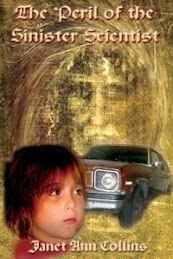
The Peril of the Sinister Scientist

This blog is not intended as a way to publicize my writing, but some readers might be interested in my newly published book for kids, The Peril of the Sinister Scientist, because one of the leading characters uses a wheelchair.
This book is not an attempt to teach children about disabilities. The person just happens to have special needs and is part of the ordinary world in which the main character lives. She showed up in the story when I was writing the first draft without being part of my original plan, but turned out to play an important part in the plot.
In my opinion it would be a good idea for more fiction books to include people with special needs without portraying them as pitiful. Perhaps that would help eliminate some of the prejudice that still lingers in our society.

Saturday, July 18, 2009

Mental Illness

My husband and I have been conservators for someone in a mental hospital for many years. Once we visited a friend in the area and, taking a completely different route to the hospital from the friend's home, we got lost.
Seeing a couple of teen boys by the side of the road we pulled over and I rolled down the window.
"We're lost," I told them. "Can you tell us how to get to the mental hospital?"
I have never seen such shocked and horrified expressions on human faces in my life!
One of the boys stammered out, "No," and we drove away, unable to keep from laughing at their reaction. Of course that probably convinced them we were crazy.
While that incident seemed funny at the time, it's sad to realize how much prejudice there is against mentally ill people. I even know of a man who was asked not to return to the church he attended because the pastor thought he might scare away visitors. There was nothing dangerous or violent about that man's behavior at all.
Mentally ill people aren't all psychopaths, as portrayed by Hollywood. It's against the law to portray racial groups according to stereotypes and maybe a lot of people's lives would be improved if it became illegal to portray people with disabilities that way.

Wednesday, May 13, 2009

Prejudice and Disabilities

Prejudice means assuming all members of a group are the same. That's not necessarily a bad thing, and probably helped our ancestors survive. For instance if someone died from eating a poison mushroom or being bitten by a rattlesnake it was wise for those who saw or heard about the event to be afraid of any kind of snake or mushroom. Better safe than sorry.
A negative prejudice about a group of humans is bigotry, and that's never a good thing.
Unfortunately a lot of people are prejudiced against others who have disabilities. Like most prejudices, that one is based on fear. Although there's no logical reason for it, some folks act as if they think disabilities are contagious. Maybe they believe associating with those who have special needs will make people have the same negative prejudice toward them that they hold toward others. 
Then there are the ones who give unrequested advice to people they barely know, suggesting an herbal remedy or mystical meditation, or telling them if they didn't lack faith or have unconfessed sin they'd be healed. When I had foster kids with disabilities that caused behavior problems in public it wasn't unusual for strangers to tell me I should use certain methods to make my kids behave.  This sort of thing is extremely rude, but is really just a way for people to claim they're better than someone dealing with special needs. They do that to reassure themselves that they will never become disabled because, deep down inside, they know it could happen. 
In a way, their prejudice is a disability because it limits their lives by preventing them from having healthy relationships with lots of wonderful people.