Here are some links to sites I've seen lately about special needs:
http://drgrcevich.wordpress.com
http://www.ellenstumbo.com/special-needs-what-i-see/
http://autismawarenesspage.com/?utm_source=ctg&utm_medium=home-feature&utm_term=20131113&utm_campaign=aut-blog
http://www.specialneedsbookreview.com
http://www.learningrx.com
http://www.autismspeaks.org
Anyone who cares for or about kids with special needs is invited to the Facebook group, Special Kid Carers.
Showing posts with label Special Needs. Show all posts
Showing posts with label Special Needs. Show all posts
Sunday, November 17, 2013


Saturday, August 27, 2011
Unlocked
A friend recently loaned me a book, Unlocked, by Karen Kingsbury, about a kid with autism because she knew I cared about the condition, having raised an autistic foster son. I greatly enjoyed reading it.
In my opinion, the book is most appropriate for Young Adults since the main characters are teenagers. Since it's a Christian one there's nothing offensive in it. But anyone dealing with autism will probably want to read it.
Unfortunately only a few few autistic kids are at the same place on the Autism Spectrum as Holden, the character who is helped greatly by music. But the primary focus is on the main character, Ella, who is one of the popular kids but decides to stand up for Holden in spite of what other kids think. I wish all teenagers would read it since they tend to make many bad choices because of valuing popularity.
The book is well written - I couldn't put it down - and I think it will make a difference in the world by helping "normal" people understand those who are different from themselves.
Wednesday, June 8, 2011
Prejudice
When I was a kid people with disabilities were rarely, if ever, seen in public. There were no wheelchair ramps or curb cuts, so people using chairs or walkers couldn't get around. Children who were Deaf, blind, or 'mentally retarded' and people of any age with mental illness were sent to live in institutions for the rest of their lives.
Things have improved a lot since the Americans With Disabilities Act was approved and, as a result, it's not unusual to see people with special needs in public places.
But prejudice against them still exists.
I've often seen people talk to someone pushing a wheelchair and ignore the person sitting in it, or even talk about that person as if he or she weren't hearing the conversation. And lots of folks are obviously uncomfortable with anyone who seems different.
I hope eventually everyone will realize that, while a few people with mental illnesses or personality disorders might be dangerous, most people with special needs are people first and should be treated like other people.
Saturday, February 12, 2011
Terminology
The terms used for various conditions keep changing. I think "Special Needs" is politically correct at the moment but, like 'disabled,' 'handicapped,' and "crippled,' that may become unacceptable soon.
I remember when people would say 'deaf and dumb" or 'mentally retarded' but those are no longer considered polite.
Actually, saying 'deaf and dumb' was never logical because 'dumb' means not having a voice and most deaf people do have voices. And it was assumed that the inability to talk showed a lack of intelligence so the term, dumb, became a synonym for stupid.
However, in most cases the terms have been changed because people tend to assume that the disabilities/special needs themselves are something to be ashamed of, and that's wrong.
In sports a handicap is something given to a person with greater skills than the competition to make the games fair, so why not use it for people who have a condition that makes life more difficult? It sounds like a compliment to me. And retarded just means slow; there's nothing shameful about that.
The real problem is the attitude that having a special need is something to be ashamed of. Since the ADA was passed people have gotten used to seeing people with those conditions but we still have a long way to go to correct the general attitude about them.
Everyone needs to know the conditions aren't contagious so there's no need to be afraid of people with special needs and they need to know that people who have them are human beings first.
Come to think of it, maybe that prejudice is a special need itself.
Wednesday, December 15, 2010
Inclusion
Look at this video:
http://www.youtube.com/user/IamNorm2010
and go to the website, http://www.iamnorm.org/who-is-norm/news/10-09-29/YOUNG_ACTIVISTS_LAUNCH_I_AM_NORM_CAMPAIGN.aspx for the inspiring story.
Saturday, November 13, 2010
A Different Kind of Grief
Decades ago Elizabeth Kubler-Ross wrote about five stages that people dealing with grief are likely to go through; denial, anger, bargaining, depression, and acceptance. Since then her theory has been questioned, but apparently most grieving people do go through those stages, although they may be in a different order and some or all stages may be repeated many times.
Death is not the only thing that causes grief. We may grieve at the loss of anything we value, and discovering that we or a loved one have a serious medical condition or special need normally results in grieving. And, unlike death, these things are not likely to be done so that we can deal with them and move on. Instead they often continue for a lifetime.
Those things can bring about the death of a dream, such as when a child is diagnosed with something that will prevent him or her from having the expected sort of childhood, or when people discover conditions that will prevent the kind of career or marital relationship they had or hoped for.
It's perfectly normal for people dealing with special needs to have certain stages of grief occur many times during their lifetimes.
Wednesday, November 3, 2010
Not Horrible
Now that Halloween is over I've been thinking about the many portrayals of people with special needs as something to be afraid of.
Scary characters are often shown with scars and missing limbs.
Mental illness can create some dangerous behaviors, but that doesn't mean it's okay to depict mentally ill people as monsters.
And people with developmental delays are neither funny nor frightening, as they are often portrayed.
Even vampires and werewolf legends may be based on the rare diseases, porphyria and xenodermaphobia, which made people avoid light and crave blood.
That kind of Halloween costumes and decorations may make it more difficult for people with special needs to be accepted in our society.
Wednesday, October 27, 2010
Talking Machine
In my last post I talked about a friend with a speech prosthesis who uses an Ipad to help him communicate. Soon afterwards I saw information about a company that make devices made specifically for that purpose. I don't know anything about them, and can't vouch for for the products, but in case anyone is interested, here's the website:
http://www.bindependent.com/gotalk.htm
Saturday, October 16, 2010
Rosa's Law
A new law has been passed making it illegal for the federal government to use the term, "Mentally Retarded" in laws and documents. The law is named after a girl with Down's Syndrome and we hope it will help people with similar conditions.
It might.
However I'm afraid the newly acceptable term, "intellectually disabled" will soon have the same connotations as the previous one. For years the words referring to that kind of condition have kept changing. "Moron" was certainly insulting, and "mentally retarded" (which means slow or held back) was an improvement over that term. Later "developmentally delayed" was often substituted for that one, although the literal meaning is similar.
I wonder if the new term will include people with learning disabilities, autism, personality disorders, and mental illness, all of which could be considered intellectual disabilities. If so, some interesting legal problems may develop.
As long as the majority of people are uncomfortable with those who are different from themselves I don't think changing the terminology will make much difference. Prejudice usually results from fear and people's effort to assure themselves that they're safe because they aren't like "those" people and never will be.
We've come a long way since children with "intellectual disabilities" and many physical ones were sent away to institutions and their families could act as if they didn't exist. But there's still a long way to go before people with special needs are accepted in our society. Changing that term is one step in the right direction, but it's a very small step.
Saturday, September 4, 2010
Convalescent Home
This will be the last post about my time in the convalescent home.
After the first week I was moved to a unit generally known as "Runabouts" because all the kids there were mobile. I was one of the only two eleven-year-olds and all the others were younger, but many were from the inner city and more sophisticated than I was.
The kids had various kinds of conditions and, in most cases, I never found out what their disabilities were. Our physical activity was limited, we had to take boring naps every afternoon, and most of us were given meds often. Once the nurse came out and gave me my allergy shot in front of the other kids on the playground and they thought I was brave not to even to flinch. Of course I was used to shots by then and they didn't bother me.
Our classroom was similar to a one room schoolhouse, although there were actually two classes divided by age. The teacher was good and she thought I was smart because I could shelve books in according to the Dewey Decimal system, which I'd already learned while hanging out in the library at home.
We were cared for by nurses and, like teachers, they had different styles of working with kids. One was a pushover and the kids could get away with anything when she was on duty, one was just, plain mean, and my favorite was strict, but fair.
Although living in the convalescent home wasn't a bad experience and I had no asthma attacks while there, I was happy to be sent home at the end of my six week stay, which happened to also be the end of the school year. But the experience had changed me in ways I couldn't guess at the time. It helped me understand people who were different from myself and made me care about people with special needs for the rest of my life.
Saturday, July 17, 2010
Good Things About Special Needs
Recently I've met several people with special needs similar to those I deal with and discovered that a couple of acquaintances also had some. All of a sudden I have a bunch of new friends.
I probably talked about this at Thanksgiving time, but why wait until November to count our blessings? Special needs can cause a lot of problems and difficulties, but there are a couple of good things about them. One is that they help us appreciate things that aren't limited. The ease of becoming good friends with others who understand what you're living with because of their own experience is another good thing. In my opinion, that's a very good one.
In the long run when we look back on our lives I think we'll realize that relationships matter more than health, wealth, status, or lots of other things.
Saturday, June 12, 2010
Institutions
Forty years ago and more, most people with physical or mental disabilities were sent to live in institutions of various kinds. Often their families had no further contact with them.
As a kid I spent a few weeks in a "convalescent home" because of my asthma and my mother drove several hours to visit me every week. But most of the other kids rarely, if ever saw their families. Some had been left there as infants and never saw their parents again.
As a young adult I worked at the California School for the Deaf and, while some kids went home every weekend, others only did so a few times a year when the school was closed for vacations. In some cases that was because the parents lived great distances from the school, but others who were closer didn't know Sign Language and couldn't communicate with their own children. Now I understand the school sends all students home every weekend and those who live far away stay with friends.
I knew some Deaf adults who grew up in a state hospital for "mentally retarded" when their intelligence was normal. They had even developed their own sign language in order to communicate with each other. Today they would never have been sent to an institution like that. And even the patients who are correctly placed in developmental centers usually have opportunities to go out into nearby communities if they can handle doing so.
Today people with special needs are likely to be seen anywhere and that's helping to overcome some of the stigma attached to disabilities. Things have certainly improved.
Saturday, June 5, 2010
Carol Guscott
Here's another person I know who has dealt with special needs in an inspiring way. Her book isn't published yet, but should be wonderful when it is. Please go to:
http://tinyurl.com/2eeko7j
Be sure to watch the video.
Saturday, May 22, 2010
Returning Problems
People who have disabilities and special needs learn to live with them, and even the most unpleasant or painful conditions may eventually seem almost normal when they are always present. It's amazing how humans can learn to cope with almost anything. I guess we redefine ourselves and the world to assume that's just the way things are.
But consistency is essential to that kind of coping.
One of my college psychology professors said the hardest thing for people to deal with is not knowing what to expect. That's why prisoners who were tortured or brainwashed were kept guessing and never knew when their captors would be nice or cruel to them.
Some conditions can be under control or in remission, only to flare up or return, and that can be much harder to deal with emotionally than more serious consistent things.
And it can do more harm than good to remind people that "at least" they had time when they felt better and they already know how to cope. Please don't say that to someone with a returning or worsening problem.
Friday, April 23, 2010
Writing
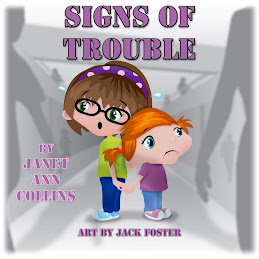
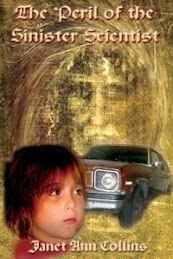
I recently got a sample of the artwork for my upcoming book, Signs of Trouble, which will be published this summer. No, the book isn't about American Sign Language, but about kids with learning disabilities. One of my already published books, The Peril of the Sinister Scientist, has a main character who uses a wheelchair.
I don't usually plan to write about characters with special needs, but they seem to pop into the stories anyway. I guess that's because I've known so many people who have conditions like that. And maybe my books will help kids who read them realize that people who have special needs are not that different.
Wednesday, April 14, 2010
Rosacea
I've had bumps that are sometimes red on my cheeks for many years and never thought much about them. Yes, I knew it was Rosacea, but that seemed like a minor problem.
However a few months ago I learned the condition had spread to my eyes and also the insides of my eyelids. When that happens to people their eyes are likely to become red and irritated and the condition can sometimes cause blindness. Although that's uncommon, my doctor says I'll have to treat my eyes for the rest of my life to be sure to avoid it.
I've been doing some internet research about the condition and found these sites, among many others, which offer a lot of information:
http://health.groups.yahoo.com/group/rosacea-support/
http://rosacea-support.org/treating-ocular-rosacea-from-aao.html
http://www.rosacea.org/patients/index.php
According to the information on one of them, avoiding certain foods can help some people, so I'm planning to try that. It's one thing my eye doctor wasn't aware of.
Saturday, March 13, 2010
Not Knowing
When I was in college back in the 1960s one of my Psych professors told us the most difficult thing for humans to endure is not knowing what will happen. He said when prisoners were brainwashed the captors made sure to keep the torture unpredictable because otherwise the prisoners were better able to hold out against it.
Unfortunately, many people with special needs and their families are often in a position of not knowing what to expect. Will their conditions get better or worse? Will they be able to get the medical help they need or not? Will this new treatment be effective or won't it? Not knowing can be very stressful.
But different people react differently to stress and perhaps the difference depends at least partially on attitude. Expecting the unexpected can become the norm, in which case not knowing what will happen can be easier to deal with.
Maybe it works sort of like physical exercise in healthy people; repetition increases strength. After all, most people with special needs and their families have already dealt with things that would seem overwhelming to "normal" folks, but many of those things have become just another part of everyday life.
In weakness there really can be strength.
Wednesday, March 10, 2010
Moving?
Sometimes people with special needs can't get the medical help they need where they live. This is especially true of people outside of urban areas since most hospitals that provide advanced, specialized treatment are likely to be in or near cities.
If only one treatment is needed people will go to the necessary place and return home within a few days or a week, but what if repeated or extended treatments are necessary? Is it better for families to leave their homes and move so one person can get care?
That depends on a lot of factors. Can they afford it? How difficult would the move be? Is the person needing care a child or an adult? Would family members need to change jobs or schools? Would it be possible for the person in need of care to stay in an assisted living facility? Could other family members stay with a friend or relative for frequent visits?
This sort of situation requires lots of decisions and isn't easy for anyone in the household, but it all comes down to one question; would the value of the treatment be worth it?
Wednesday, March 3, 2010
Positive Thinking
I've probably mentioned this before, but it's worth repeating. As someone who has dealt with many special needs of students, friends, foster kids, and myself, I've become aware of two advantages to having chronic illnesses or disabilities.
First, the limitations those conditions cause tend to make us more aware of and grateful for the things we can do and experience.
But, in my opinion, the greatest advantage is the mutual understanding with other people who have limitations even if they aren't the same as our own. Sharing the experience of realizing we're different in some ways from other people and there may be some things we can't do, but that we're still complete human beings who can accomplish a lot helps us connect at a deep level. Of course if our special needs are similar the connection is even stronger.
People who care for others with special needs can also connect at a deep level.
It's easy for us all to become friends.
Saturday, February 27, 2010
PTSD and Chronic Illness
Post Traumatic Stress Disorder is an anxiety disorder known to develop after someone experiences emotional trauma, such as serving in a war zone or being abused, especially if the experience is repeated or continues over an extended period of time. PTSD is considered a chronic illness.
But a friend recently sent me information about an interesting scientific study showing that people with chronic illness may develop PTSD. The new information shows that people who must live with chronic illnesses which often appear suddenly; require major life changes; cause severe symptoms, sometimes including pain; and may require unpleasant treatments, are likely to develop Post Traumatic Stress Syndrome as a result.
That is unfortunate, but may not be entirely bad news. People who were considered emotionally unstable and told their illnesses were psychosomatic may be taken more seriously now that emotional problems are known to be a result rather than a cause of their other conditions.
Here are some relevant internet sites that explain more about the connection:
http://tinyurl.com/yj9stup
http://tinyurl.com/ykoo5q9
http://tinyurl.com/ydzt2dy
Subscribe to:
Posts (Atom)