Showing posts with label Children with Special Needs. Show all posts

Wednesday, June 22, 2011

Reader's Digest

I don't subscribe to the Reader's Digest anymore because they've got less than half the content they used to carry, but this week I picked up the June/July copy at the grocery store. It contains an article about parenting a child with special needs that might be of interest to anyone doing that.
The author's daughter has Autism so she talks a lot about that spectrum, but the article includes plenty of information about caring for people with other special needs and it's written in a friendly style.
Anyone caring for or about someone with special needs might want to read the article, My Daughter, Myself, by Sallie Tisdale.

Saturday, January 29, 2011

Grief

Sometimes people grieve when no death is involved - except maybe the death of a dream.
It's not uncommon for parents to grieve when they learn their child has special needs and won't be able to have the life they'd imagined.
Or if someone learns they have a disability or chronic illness themselves grief is a normal reaction.
As when someone dies, it's usual to go through the five stages of grief explained by Elizabeth Kubler-Ross (sorry I don't know how to add umlauts to her name.) Those stages are denial, anger, bargaining, depression, and acceptance and people may cycle through them for a long time or return to them long after they've come to terms with the situation. The same thing is true with the sort of grief I'm talking about, and any of the stages can re-occur at any time.
If they do, it's perfectly normal.

Saturday, November 20, 2010

The Right to Grieve

One of our foster kids often had violent tantrums. Smashed windows and thrown furniture were common throughout the years he lived with us. But he was a kind-hearted child at heart and, even when having tantrums, we knew he'd be careful never to hurt anyone else.
When he reached puberty that changed and the day he physically attacked me we knew we wouldn't be able to keep him because he would endanger the other kids. We gave him up and he was institutionalized.
Although we hadn't been able to adopt him because of legal technicalities, we had considered him our son and loved him as our own. And when we lost him, I was stricken with grief.
One relative, who had been a teacher and knew it's possible to love kids you didn't gave birth to, told me she was sorry. Someone else who had been in danger of loosing her kids in a custody battle also expressed sympathy. But that was all the support we got. My mother told me she was glad our son was gone because caring for him had been so hard on me, and other people had similar reactions, if they noticed at all.
A few weeks later the son of one of my friends was killed in a car accident and the entire community offered her sympathy and support. I'm ashamed to admit it, but I felt jealous. Why couldn't those people understand that loosing a child for any reason can be just as painful as loosing one to death?
Since then whenever I hear of people who lose their children in custody battles, have to give them up for adoption, or send them away for institutional care they have my greatest sympathy. Loosing a child for any reason is one of the most painful things a parent can experience.

Wednesday, November 17, 2010

Special Kids Carers

I've just started a Facebook group for people, such as parents, teachers, etc., who care for and about children with special needs. The name of the group is Special Kid Carers. I don't know if many people will want to join and participate, but I couldn't find any similar Facebook groups so I hope it will meet a need. Please apply to join if you're interested.

Saturday, November 6, 2010

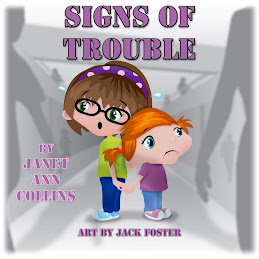
Signs of Trouble

Because of my personal experience with special needs, characters who have them appear in my writing even if I don't plan on that in advance. For example, one of the main characters in The Peril of the Sinister Scientist uses a wheelchair.
Now I've written a book for children specifically about kids with learning disabilities and it has just been published. Signs of Trouble is about two girls with dyslexia who get separated from their Special Education class on a field trip and use what they've learned about safety rules and recognizing signs to get reunited with them.
The book was officially released several days ago and I'm waiting for my copies to arrive in the mail and for it to appear on Amazon, which should happen soon. The book will also be available at other online sites like Barnes and Noble and bookstores can get it through their distributors.
I'm hoping the educational material in the back of Signs of Trouble will help kids understand others who are different from themselves as well as reinforcing safety rules and beginning reading skills. And I think they'll enjoy the story, too.

Saturday, October 9, 2010

Tying it Up

Lately I've been posting a lot about my personal experiences with special needs. I didn't mention Chronic Fatigue Syndrome because I already blogged a lot about it here:

http://tinyurl.com/yd8v2qm

I also worked with lots of children who had special needs in various teaching positions. However I won't get into that here because anyone reading my posts now knows enough about me.

Thursday, February 18, 2010

Asthma

More and more people, especially children, are developing asthma lately. But with modern medical treatment that's usually not as serious a condition as mine was when I was a child.
I developed it a couple of years after my father had died because my mother became a chain smoker and our house was filled with smoke and tobacco odor.
Instead of coughing, I wheezed, almost constantly. Often during a bad asthma attack I'd be straining with all my might to breathe, get a cramp in my diaphragm, and have to continue forcing air into my lungs in spite of the pain.
I used my "adrenaline mist" nebulizer much more often than I was supposed to and the family doctor would sometimes scold me about that, but he'd still renew the prescription because I couldn't survive without my "breather."
Often my asthma would become so bad my mother would have to call the doctor. He'd come to our house and give me a shot of "adrenaline." If that hadn't helped in fifteen minutes he'd give me another. Usually that worked, but if there was still no improvement he'd pick me up, carry me down to his car, and take me to the hospital. My mother would follow in her car, I'd be admitted, and they'd put me on oxygen.
I know lots of children and adults with asthma now and the increased number of asthmatics may be due to air pollution. However none of the asthmatic people I know today have symptoms as severe as mine were. (I did know one teenager who had an asthma attack, kept exercising, and died, but that happened because he was high on illegal drugs at the time.) In general, most asthma is at least partially controlled by medications that didn't exist when I was a child.
But it's still a serious condition and I wish all nicotine addicts would get into recovery so nobody had to breathe second hand smoke.
P.S. I apologize for being off schedule this week. I'll be back to the regular Wednesday/Saturday posting next week.

Wednesday, February 10, 2010

Lovelessness

As Valentine's Day approaches and everyone is talking about love I thought of a boy I once knew who couldn't love anyone. Jake (not his real name) couldn't comprehend the difference between right and wrong or truth and falsehood although he tried hard to understand, and his parents thought that was one more learning disability. Doctors told them his violent tantrums were a result of ADHD and it wasn't until he was an adult that he was diagnosed with Antisocial Personality Disorder. People with that condition used to be called psychopaths.
Jake did prefer some people to others, depending on how much they pleased him. He was good at finding ways to control people psychologically, and enjoyed doing so. As an adult he became dangerously violent and he ended up in jail.
His parents felt like failures but it wasn't their fault. His personality disorder was the result of prenatal neurological damage they couldn't have prevented, and was no more something to feel guilty about than any other disability. His parents were loving people and did the best they could.
Personally, I feel sorry for anyone who is unable to love other human beings. While people with APD don't know what they're missing, that might be the worst disability of all.

Wednesday, January 27, 2010

Guilt and Stress

In the last post I mentioned that some kids were born with special needs because of prenatal damage caused by things like illegal drug use. The parents of those children usually felt guilty and blamed themselves for the disabilities their children had to deal with.
Other parents have blamed themselves for things like prescribed medications or illnesses that caused prenatal damage, accidents where their children were seriously injured, being unaware of a hereditary condition in their family, etc.
While some disabilities are the direct result of choices made by the parents, in other cases there was no way anyone could have predicted the outcome. But often, even when parents couldn't have done anything to prevent their children from having disabilities, they feel guilty about them.
But it doesn't matter if the parents were responsible or not, living with guilt makes it more difficult for them to meet the needs of their children, and parenting kids with special needs is difficult enough without that.
When I worked in the dormitories at the California School for the Deaf I noticed that nearly all hearing parents had gotten divorced by the time their children were in their teens. Of course some of them probably would have done that anyway, but other marriages couldn't handle the stress of having kids they considered disabled. However the deaf parents considered their kids perfectly normal, so that stress didn't exist in their families and most of them stayed together.
Fortunately many more resources to help families deal with disabilities exist than used to be available and I hope most parents take advantage of them. And if they feel guilty, for the sake of their children and their marriages, I hope they'll get counseling and learn to forgive themselves.

Wednesday, January 20, 2010

Teachers

I still have the sweater vest a grateful mother made for me years ago because I'd "solved" her son's "problem." But there wasn't really a problem at all. The boy had been expelled from a preschool and his mother told that he had Attention Deficit Hyperactivity Disorder but he was a perfectly ordinary kid and did fine in my class. The previous teacher obviously didn't know how to deal with energetic children.
More recently another boy I know left the expensive private school he'd been attending because the teacher said he had learning disabilities. He was functioning academically far below grade level, but that might have had something to do with the fact that the teacher blamed him for every problem in class and he was often punished for things he hadn't done. After one year in public school his academic levels were normal and he was a much happier kid.
On the other hand, I had two preschool students whom I suspected had learning disabilities. In one case the parents had the child tested and got him into an early intervention program so he did well in school later. The other parents were in denial about the problem and didn't have the child tested for years, by which time she had learned to think of herself as a failure.
Teachers are not medically trained and are not qualified to make a diagnosis but if a teacher suggests that a child may have a learning disability it can't hurt to have testing done. Better safe than sorry.

Wednesday, December 30, 2009

Dyslexia Idea

Dyslexia is a language processing disorder that makes learning to read very difficult. However people I've known who had dyslexia were able to speak normally, so apparently it's primarily a problem with processing visual symbols such as letters and words.
The other day a probably crazy idea occurred to me, but it's possible that it might work. What if dyslexic children and others with learning disabilities that make it difficult to read were taught to read in Braille? Of course reading Braille wouldn't be as useful to them as being able to read written and printed words because far less material would be readily available for them, but it's not impossible that if kids were to become able to read with their sense of touch it might help their brains bypass whatever makes it so hard for them to connect visual images with speech so they could then learn to read visually.
I believe using tactile forms of regular alphabet letters may have been tried, but even adults who can read fluently would find it difficult to decipher small versions of those. That's why Braille writing was invented.
I can't be the first person to have thought of this and I'd love to know if Braille has ever been tried for children with normal vision who have dyslexia and, if it has, how well it worked.

Saturday, December 26, 2009

ADHD?

Have you ever wondered if your child might be hyperactive? After the holidays is a good time to find out.
Of course lots of kids get over stimulated at this time of the year, but there's a difference between behavior problems caused by excitement, stress, and fatigue and those caused by ADHD.
When our hyperactive kids were young we discovered that caffeine had the opposite effect on them compared to how other people react. I read information about the disorder confirming that reaction to be frequent in kids who have the condition. However once people with ADHD reach puberty they tend to react to caffeine in the usual way.
After the holiday excitement is over, things have calmed down, and your family is back to eating as usual. you might want to try giving your kid a lot of chocolate and see what happens. If the child becomes over stimulated he or she is reacting normally. (Obviously it's best not to try this before school or bedtime.)
But if the child becomes sedated after eating the chocolate chances are good that he (more boys than girls have the condition) has ADHD. If that happens please check with your medical practitioner and ask your local school district for an evaluation. Many districts will do tests for free even for children who are not yet of school age because early intervention can make a difference.

Saturday, December 12, 2009

Early Intervention

When kids have special needs early intervention really can

make a big difference.

In the past children who were born deaf in hearing families

often didn't get the opportunity to learn any language until their

brains were past the readiness age for doing that. As a

result they had limited communication skills.

Learning disabilities and other neurological problems

were often not diagnosed until kids were around seven years

old. If they'd been able to get the help they needed earlier they

would have been able to learn a lot more.

I remember a little boy in my preschool class whose behavior was unusual. Among other things, any time there

was a lot of noise he'd run wildly around the room. I

suggested to his parents that they get him tested, which the local school district did for free.

He was found to have auditory processing disorder and the

school district provided the training he needed. As a result

he was able to function normally by the time he entered Kindergarten.

On the other hand, a little girl in my preschool was

advanced in some areas but had a lot of difficulty in others.

I suggested to her parents that they have her tested,

but they refused, insisting she didn't have a problem. She

later turned out to have a learning disability and was placed

in a Special Education class.

If only she had started getting the help she needed at an

earlier age perhaps she would have been able to attend

regular classes with only a few hours of tutoring by a

Special Ed teacher each week.

Any time there's even a slight chance that children

might have a problem it can't hurt, and might help a lot,

to have them tested as early as possible.

Saturday, December 5, 2009

Feingold Diet

It was in the 1970s that I met Dr. Feingold and he recommended his diet for our hyperactive foster sons. Soon afterwards the Feingold diet became well known, and there has been a lot of controversy about it.
In our experience, it worked very well.
Once our boys had been on the diet for a couple of weeks the violent temper tantrums had gone from several every day, usually for no discernible reason, to about one or less a week, always with an obvious cause. That result certainly made it worth eliminating artificial coloring and flavoring from the family diet, but we found letting the kids eat sugar had no effect on their behavior at all.
Some people say the Feingold diet only works for psychosomatic reasons, but there were times when nobody knew the kids had gotten a trace of something forbidden and they reacted anyway. I remember one time the ingredients in a certain kind of cereal had been changed, but the company continued using up boxes with the old ingredient list on them. Not only our kids, but those of several other people in a support group we belonged started showing their old behavior problems within a few days of each other. None of the parents could figure out what was causing the problem. Sure enough, all those kids had eaten the cereal with the new ingredient and as soon as they stopped eating it their behavior improved again.
The hardest part of following the diet was avoiding fruits and vegetables high in salicylates, and I've since learned that in other parts of the world different produce is on the list of foods high in those chemicals. That may depend on differences in the soil. It's impossible to eliminate those natural chemicals completely, but avoiding them as much as possible does make a difference.
However, if even a trace of artificial coloring or flavor, such as in medication, is ingested it will cause a reaction so there's no point in just cutting down on those things.
The Feingold diet may not work for every child with ADHD, and I've heard it seldom helps adults, but it's certainly worth trying.

Wednesday, November 25, 2009

Thanksgiving

Some people think anyone with a disability probably doesn't have much to be thankful for. They're wrong!
Besides the obvious things most humans share, such as people who care about them, special needs give us a sense of appreciation that others lack. For example if someone has lost certain abilities he or she usually develops a vastly greater appreciation of the abilities that remain than "normal" people have.
Perhaps the biggest blessing is the way we understand each other.
Although my chronic illness and pain have greatly improved, when I meet someone else with chronic pain or illness and they learn of my experience we connect instantly at a deep level because we share some major life factors other people can't comprehend. The same thing applies to caregivers. Raising foster sons with special needs helped me understand other parents doing the same thing, and my own mother's terminal illness gave me a taste of what life is like for people caring for family members with similar problems.
Sharing the experience of dealing with disabilities, even those that are different from the ones in our own lives, helps us become friends easily.
Special needs give us a lot to be thankful for.

Saturday, October 10, 2009

A Good Parent

One of our foster kids who'd always had violent tantrums became extremely dangerous when he reached puberty. For the safety of our other kids we had to give him up and he was placed in an institution.
I had tried for years to help him learn to control his behavior but, in spite of all my efforts, he hadn't learned. For months after he left our family I felt guilty.
Then one day it occurred to me that no matter how good a mother might be, her parenting could never make a physical disability go away. I knew our deaf kids would remain deaf. Other mothers whose children had conditions with no known medical cure would not expect to eliminate their children's special needs by good parenting. Neurological problems and mental illnesses are no different than physical disabilities.
Perhaps there are other parents out there who feel guilty because they can't correct their kids' behavior problems caused by things like that. If so, I hope they will realize, like I did that, as the saying goes, "When all you can do is all you can do, that's all you can do." The most important thing any parent can do is love their children and do the best they can to meet their needs. If they do that, they are good parents regardless of the results.

Wednesday, October 7, 2009

Guilt

Parenting kids with special needs isn't easy, but sometimes dealing with the attitudes of other people can seem more difficult than the parenting itself. Why is it that people seem to think the parents must have done something wrong in order for their kids to have disabilities? It's probably because they want to reassure themselves that nothing similar could happen to them.
Many parents seem to feel guilty about their own children's disabilities.
When I worked at the California School for the Deaf I noticed that by the time kids were in middle school nearly all of their parents had gotten divorced except for those from Deaf families. I wouldn't be surprised if feelings of guilt were a factor in many of those divorces.
Some special needs are far more difficult to deal with than hearing loss, and there's a lot of stress involved in caring for children who have behavior problems or need lots of medical attention. But guilt should not be an added stress factor. Even if parents made a choice that resulted in prenatal damage or an accident, I hope they can forgive themselves and move on.

Wednesday, September 30, 2009

Joni and Friends

Author and artist Joni Eareckson Tada, who is also a quadriplegic, began a ministry to people with disabilities about thirty years ago and thousands of people have been helped by Joni and Friends (aka JAF) over the years.
Among other things, the organization educates churches about how to help people with special needs, collects and donates used wheelchairs to people in other countries who can't get them otherwise through their Wheels for the World program, and runs camps for children with disabilities. They have local offices in many parts of the country and are available to share information about resources there and online. Those are only a few of the things Joni and Friends offers.
To learn more about that helpful organization or to find a ministry center near you go to http://www.joniandfriends.org/

Wednesday, September 9, 2009

Good Parents

In our society children are sometimes regarded as status symbols and parents are judged by the achievements of their kids. But parents of children with disabilities know their kids may never be able to excel at school or sports, become popular, or grow up to get well-paid jobs.
No child should ever be used as a status symbol, but all parents do want and need to know if they're doing a good job.
While raising our foster kids I wondered how I would be able to tell whether I had been a good mother or not when they grew up. They were unlikely to be employed or succeed at other things our society values, including those that truly are important.
Looking back I can see my parenting from a different perspective. Now I understand what really mattered was that I hung in there even when raising them wasn't easy and, most important of all, loved my kids in spite of all their problems,

Saturday, August 15, 2009

The Peril of the Sinister Scientist

This blog is not intended as a way to publicize my writing, but some readers might be interested in my newly published book for kids, The Peril of the Sinister Scientist, because one of the leading characters uses a wheelchair.
This book is not an attempt to teach children about disabilities. The person just happens to have special needs and is part of the ordinary world in which the main character lives. She showed up in the story when I was writing the first draft without being part of my original plan, but turned out to play an important part in the plot.
In my opinion it would be a good idea for more fiction books to include people with special needs without portraying them as pitiful. Perhaps that would help eliminate some of the prejudice that still lingers in our society.